
NTD TV Live

NTD Live TV
Audio Podcasts:

China Digest: Reality and Tradition
Morning News
News at Noon
Evening News
China Insider with David Zhang(Ganjing World)
China Uncensored(Old to New)

At a time when our nation is portrayed as increasingly polarized, media often ignore viewpoints and stories that are worthy of attention. American Thought Leaders, hosted by The Epoch Times Senior Editor Jan Jekielek, features in-depth discussions with some of America’s most influential thought leaders on pertinent issues facing our nation today.
Craig Considine is the author of “When Marx Meets Islam: Navigating Radical Ideologies in Defense of the West.”
In this episode, he argues that the battle for Western civilization is being fought in narratives, policies, theories, and classrooms. And there’s no better proof of this, he argues, than what is happening with allied Marxist and Islamist movements.
He answers a host of critical questions: How did cultural Marxists and radical Islamists join in an unlikely alliance against Western civilization? How are terms such as “Islamophobia” and “Zionist” being weaponized to silence dissent and free thinking? What are the dangers of teaching young people to despise their nation? And can free societies protect open debate without allowing intolerant movements to take control?
Views expressed in this video are opinions of the host and the guest, and do not necessarily reflect the views of The Epoch Times.

Journey to the West(Voice-Over-Painting)
One of most popular Chinese Classical Novels, written 500 years ago. It depicts an epic spiritual and physical pilgrimage, by 5 Buddha’s Disciples, that lasted 14 years, covered thousands of miles, endured 81 tribulations and finally reached divine enlightenment. From the origin of the Universe to the planning and undertaking of the jouney to the climax ending, the novel presents a panoramic holistic view of the Chinese civilization.

Before the pilgrims take their first step, a monkey is born from stone.
*Journey to the West* (西遊記), one of China’s most beloved classical novels, begins with the origins of the world and the rise of Sun Wukong, the Monkey King. It follows the monk Tripitaka and his four companions on a fourteen-year pilgrimage to obtain Buddhist scriptures. Across thousands of miles and eighty-one trials, they contend with monsters, temptations, and their own shortcomings. The road to the scriptures becomes a journey toward enlightenment.
At once comic, adventurous, and spiritually searching, the novel offers a panoramic view of Chinese civilization through its folklore, religious traditions, and everyday life. Each chapter of the podcast is accompanied by two paintings by Chen Huiguan, offering a visual companion to the pilgrims’ journey.
One of the most celebrated Chinese Classical Novels, written by Luo Guanzhong, 600 years ago. It rolls out an unique era in history when China was torn apart into three warring kingdoms. The novel is famous for its depictions of the three Peach Garden Sworn Brothers’ loyalty, its portrayals of brilliance of the strategists of the time, such as Zhuge Liang, its meticulous recounts of some of the most famous military battles in history, such as the Red Cliff Battle, and its detailed dissects of the strategies that enabled the underdogs in these battles to upset the corresponding military might.

An empire crumbles. Heroes rise. Loyalty, ambition, and strategy contend for the throne of China.
Romance of the Three Kingdoms (三國演義), traditionally attributed to Luo Guanzhong, transforms the turmoil surrounding the fall of the Han dynasty into a sweeping saga of warfare, brotherhood, and the struggle for power. As rival leaders compete for supremacy, the kingdoms of Wei, Shu, and Wu emerge from a fractured realm.
At its emotional heart stands the Peach Garden oath of Liu Bei, Guan Yu, and Zhang Fei—three men whose sworn brotherhood becomes an enduring ideal of loyalty and sacrifice. Around them moves an unforgettable cast of rulers, warriors, and strategists, including the formidable Cao Cao and the brilliant Zhuge Liang.
From court intrigue to the fire-swept waters of Red Cliffs, the novel reveals how alliances, deception, timing, terrain, and insight into human nature can overturn overwhelming military strength. Yet even the finest strategy cannot shield its heroes from pride, betrayal, loss, or the passing of their age.
Blending history, legend, and literary imagination, this Chinese classic explores the bonds that sustain people amid chaos—and the ambitions that tear them apart. Join us for an audio journey through a world where a promise can shape a lifetime, a stratagem can decide a battle, and a single choice can change the fate of an empire.
*AI-translated from Chinese text”San Gui Yan Yi”(Public Domain);
*Narrated by 2 AI voices in dialogue(Courtesy of Google NotebookLM)
One of the most popular Chinese Classical Novels. It tells General Yue Fei’s life story, and his lasting legacy. Yue Fei was the Grand Marshall of Song Dynasty against the Jurchern Invasion. It can be said that no other historical figure like Yue Fei evokes so much admiration and sympathy among Chinese people. Yue Fei’s heroic, patriotic endeavor, his martial art and military prowess, his brotherly love for his generals and soldiers, his unwavering loyalty to the country, his filial piety to his family, and his forbearance towards persecution and execution, all set extraordinary standards for the later generations.

Legend of Yue Fei Original work: Shuo Yue Quan Zhuan, by Qian Cai and Jin Feng English translation: ChatGPT Work Edited by Pei Yin © 2026 Pei Yin One of China’s best-loved classical novels, The Legend of Yue Fei blends history, legend, and stirring adventure to tell the story of the celebrated Song dynasty general who fought against the Jurchen invasion. Admired across generations, Yue Fei embodies courage, loyalty, and devotion to the country. His mastery of warfare, extraordinary martial skill, brotherly affection for his fellow warriors, and deep reverence for his mother make him a hero both on the battlefield and within his family. Yet his greatest trials come not only from invading armies, but also from betrayal and persecution at court. Filled with fierce battles, sworn brotherhoods, humor, and moments of profound sorrow, this enduring tale follows Yue Fei’s heroic struggles and tragic fate—and celebrates the ideals that have kept his legacy alive for centuries.**AI Contribution: Courtesy of Google NotebookLM**Contents generated from the original Chinese text
One of the most popular Chinese Classical Novels, written 500 years ago by Xu Zhonglin. It sets the Pre-Confucian,Pre-Buddhis scene 3000 years ago between the warring Shang and Zhou Dynasties and depicts a grand social and celestial upheaval that contrsts virtue vs vice, love vs lust, loyalty vs betrayal, righteousness vs corruption, benevolence vs cruelty, humility vs envy, gods vs demons, and “Mandate of Heaven” vs tyranny.
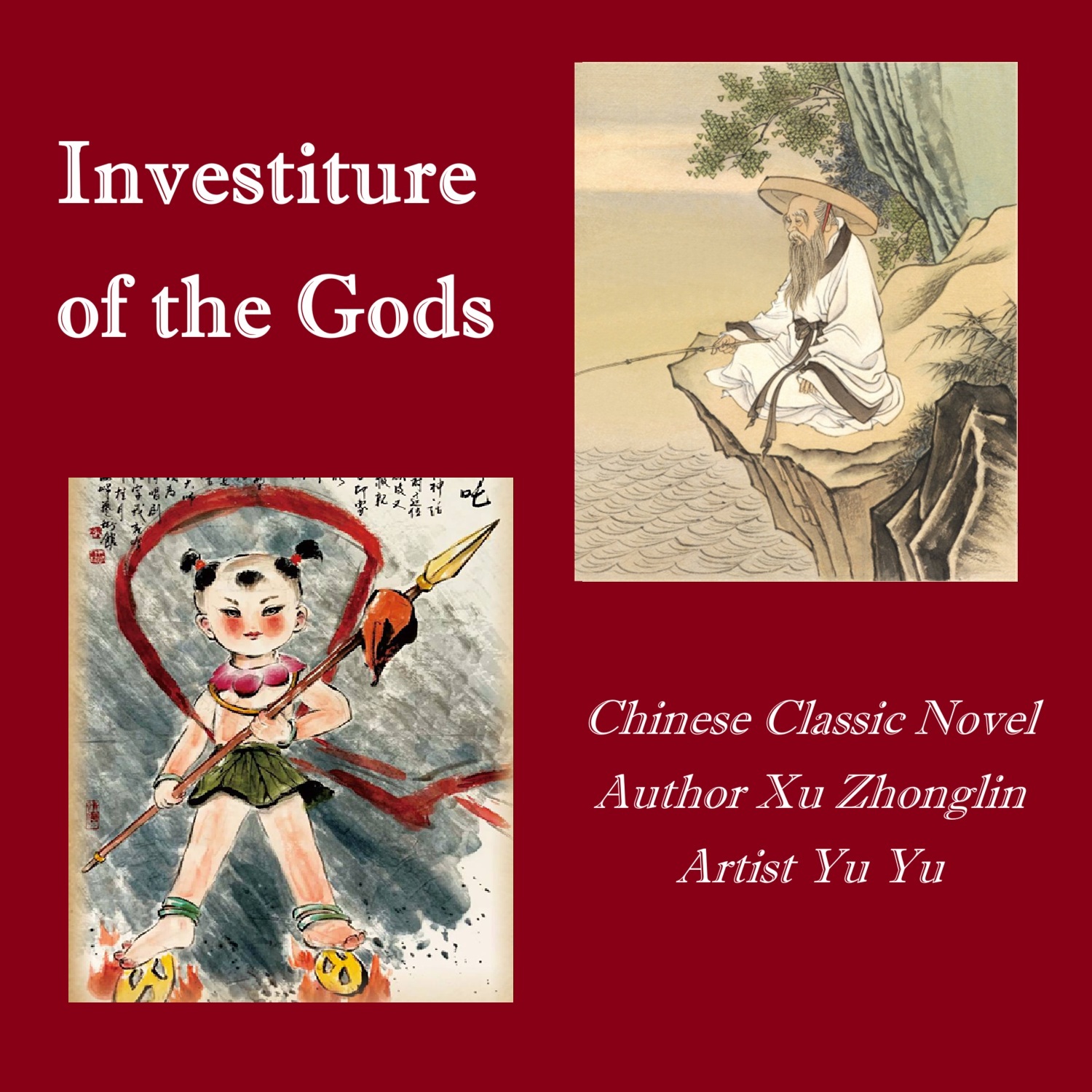
Chinese Classic Novel “Feng Shen Yan Yi” by Xu Zhonglin **AI Contribution: Courtesy of Google NotebookLM**Contents generated from the original Chinese text #investitureofthegods #investitureofgods #jiangziya #kingzhou #nezha #yangjian #kingwu #kingwen #wenzhong #shengongbao #sgb #nuwa #chaoge #xiqi #classicnovel
Romance of Sui and Tang Dynasties
One of the most popular Chinese Classical Novels by Chu Renhuo. It is a fictionalized account of the turbulent transition from the collapse of the Sui dynasty to the rise of the Tang dynasty. One striking and unique aspect of the novel is that it tells the stories of the women of the era as much as the men: different walks of life, various colours and stripes, from loyal wives, to devoted daughters; from martial women to romantic heroines; from political manipulators to cunning queens, such as Mulan, Wu Zetian and Yang Guifei and so on. All had their own stories, the good, the bad and the ugly. The novel dramatizes how personal ambition, loyalty, love, jealousy, and moral choices, men and women alike, tangle in karmic cycles and shape history.

One of the most popular Chinese Classical Novels by Chu Renhuo. It is a fictionalized account of the turbulent transition from the collapse of the Sui dynasty to the rise of the Tang dynasty. One striking and unique aspect of the novel is that it tells the stories of the women of the era as much as the men: different walks of life, various colours and stripes, from loyal wives, to devoted daughters; from martial women to romantic heroines; from political manipulators to cunning queens, such as Mulan, Wu Zetian and Yang Guifei and so on. All had their own stories, the good, the bad and the ugly. The novel dramatizes how personal ambition, loyalty, love, jealousy, and moral choices, men and women alike, tangle in karmic cycles and shape history.
**AI Contribution: Courtesy of Google NotebookLM**
Considered the Pinacle of Chinese Literature this novel is an 18th-century Chinese masterpiece by Cao Xueqin. It chronicles the rise and fall of the noble Jia clan, focusing on the tragic love triangle between the idealistic Jia Baoyu and his cousins Lin Daiyu and Xue Baochai, set against a backdrop of opulence and eventual familial ruin. The novel presents a thought-provoking view that wealth, fame, career, and romantic love are dream-like, fleeting, and “transient”. Only virtue,loyalty and good deed outlast.

Considered the Pinacle of Chinese Literature this novel is an 18th-century Chinese masterpiece by Cao Xueqin. It chronicles the rise and fall of the noble Jia clan, focusing on the tragic love triangle between the idealistic Jia Baoyu and his cousins Lin Daiyu and Xue Baochai, set against a backdrop of opulence and eventual familial ruin. The novel presents a thought-provoking view that wealth, fame, career, and romantic love are dream-like, fleeting, and “transient”. Only virtue,loyalty and good deed outlast. **AI Contribution: Courtesy of Google NotebookLM
This novel tells Jigong’s life stories – his yuoth, his cultivation and enlightment, his “ragged and mad” appearance, his comedian demeanour, and the miracles he practiced to help the needies and punish the bullies.

Meet Jigong, the ragged monk whose laughter unsettles the powerful and whose compassion brings hope to the helpless.
The Legend of Jigong (濟公全傳) follows his extraordinary journey from youth through spiritual cultivation and enlightenment to his adventures as an eccentric wandering monk. His tattered robes, irreverent humor, and seemingly mad behavior conceal profound wisdom and remarkable spiritual powers. Beneath his comical exterior lies a heart keenly attuned to human suffering—and an unerring eye for hypocrisy and injustice.
Through astonishing miracles, ingenious schemes, and encounters both hilarious and moving, Jigong aids the poor, rescues the vulnerable, exposes fraud, and brings bullies and corrupt officials to account. His unconventional methods confound those who judge virtue by appearances, revealing the difference between outward respectability and true goodness.
Filled with humor, suspense, supernatural wonder, and moral insight, this Chinese classic celebrates compassion in action, the courage to confront wrongdoing, and the enduring belief that good and evil carry consequences. Join us for an audio journey with a most unlikely hero—a monk in rags whose adventures invite laughter, awaken conscience, and restore hope.
**AI Contribution: Courtesy of Google NotebookLM
The Generals of the Yang Family
This novel a legendary saga based on the 10th-century Northern Song Dynasty, focusing on a family of loyal warriors—including Yang Ye, his seven sons, and female generals—who sacrifice their lives to defend China against the Liao dynasty. Known for supreme loyalty, they fight against foreign invaders and internal court corruption, spanning generations of sacrifice, particularly highlighted by the widows who later take up arms.

When the men of the Yang family fall, the women take up arms.
In *Generals of the Yang Family* (楊家將), Xiong Damu blends history and legend to tell the story of a warrior household in the early Northern Song. The veteran general Yang Ye and his seven sons defend the northern frontier against the Liao dynasty. Their loyalty is tested on two fronts: in battle against a formidable rival and at a court where intrigue and betrayal can undo what courage has won.
The story does not end with Yang Ye and his sons. In some of the saga’s most memorable episodes, the widows and women of the Yang household take command themselves. They carry their grief into battle, bringing their own judgment and resolve to a struggle that has already cost their family dearly.
*Generals of the Yang Family* is an epic of loyalty, courage, and sacrifice across generations. At its heart is a difficult question: what does it cost to remain faithful to a dynasty when those entrusted with its defense betray you?
**AI contribution:** Podcast content generated from the original Chinese text with Google NotebookLM.
The Eight Immortals Travel East(Journey to the East)
The Eight Immortals Travel East or Journey to the East (《东游记》), is a famous 16th-century Chinese mythological novel detailing the adventures of eight Taoist deities. The most famous story within it is the Immortals’ journey to Penglai Island, where they famously crossed the East Sea, each using their unique, enchanted treasures to show their supernatural abilities.

Selected stories from The Eight Immortals Travel East or Journey to the East (《东游记》), is a famous 16th-century Chinese mythological novel detailing the adventures of eight Taoist deities. The most famous story within it is the Immortals’ journey to Penglai Island, where they famously crossed the East Sea, each using their unique, enchanted treasures to show their supernatural abilities.
Strange Tales from a Chinese Studio
Selected stories from “Strange Tales from a Chinese Studio” (also known as Liaozhai Zhiyi) written by Pu Songling in the late 17th to early 18th century. It is considered the pinnacle of classical Chinese fiction for its elegant prose and masterful blending of the mundane with the magical.

A familiar world can turn strange in the space of a sentence.
*Strange Tales from a Chinese Studio* (*Liaozhai Zhiyi*, 聊齋志異) is a landmark collection of short fiction written by Pu Songling in the late seventeenth and early eighteenth centuries. In elegant, economical prose, Pu brings the uncanny into everyday life. An unexpected visitor or an inexplicable encounter can be unsettling, funny, or quietly moving—and often reveals as much about human nature as it does about the supernatural.
This podcast presents a selection of the standalone stories. Start with any episode: each tale opens a door of its own.


